
About Flower Beauty
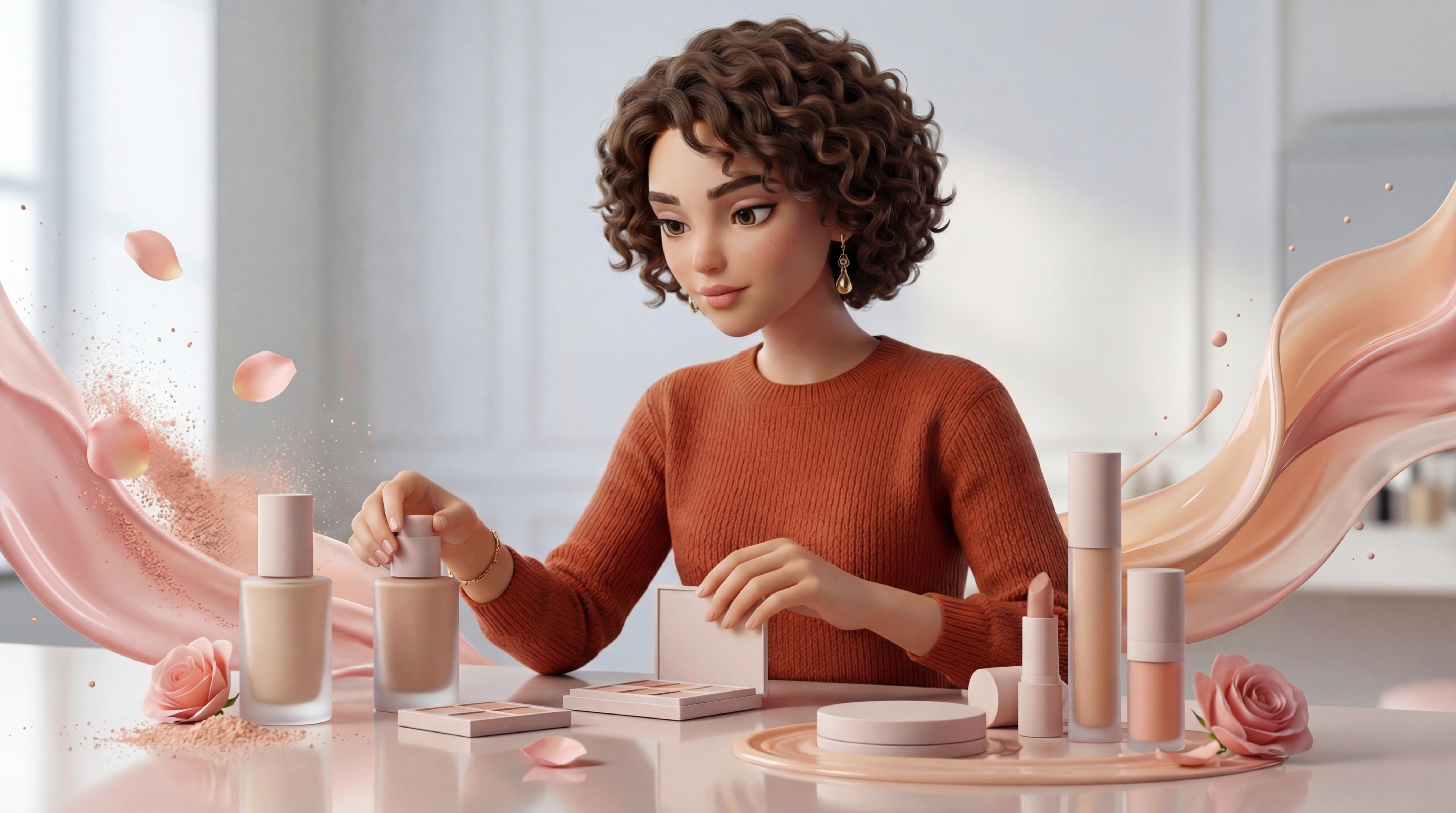
Flower Beauty is a clean, affordable cosmetics brand with national retail distribution and a fast‑growing eCommerce channel. Known for its focus on inclusivity and quality, the brand combines accessible pricing with professional‑level performance. Their small but dedicated marketing team runs full‑funnel campaigns on Meta and TikTok, utilizing Google Ads and display ads, and crafting compelling ad copy to promote hero products like foundations, mascaras, and seasonal collections.
As Flower Beauty's online growth accelerated, creative testing and analyzing key metrics became a key factor in scaling paid performance efficiently, focusing on optimizing the landing page, but the team faced a growing creative bottleneck.
The Challenge
Flower Beauty’s ad library had a consistent, polished style: flat‑lay product shots on soft pastel backgrounds. The look matched the brand’s identity-clean, minimal, and feminine, and had worked well for months. But the creative style started to lose its impact.
By Q2, 82% of its Meta ad spend was tied to this single creative approach. As audiences saw similar visuals repeatedly, impressions and engagement dropped across placements. Click‑through rates declined while clicks and watch time on video assets slipped, a classic symptom of creative fatigue in paid social campaigns.
The problem wasn’t product quality or targeting, it was the visuals. With a lean internal setup, producing and testing new creative variations at scale felt out of reach.
“We were running the same type of visuals over and over,” said Flower Beauty’s marketing lead. “We wanted to experiment more, but producing that many variations just wasn’t realistic with our small team.”
The Strategy
To unlock fresh creative directions, FLower Beauty teamed up with AdMagica AI, a platform that helps brands turn ad data into smarter creative decisions and faster production cycles, particularly in optimizing display ads.
AdMagica began with a 12‑month creative performance audit across Meta and TikTok campaigns, focusing on optimization of the ad formats and engagement strategies. The system, potentially aided by AI agents, analyzed every creative asset, grouping them by visual theme, message type, and engagement trend. This revealed that while flat‑lays had been dominant, other formats had consistently stronger results.
The data pointed to four high‑performing visual directions worth scaling:
- Application demos – showing real product use and transformation
- Lifestyle moments – capturing products in everyday beauty routines
- Influencer‑style selfies – offering a natural, relatable feel
- Texture close‑ups – emphasizing quality and sensory appeal
These insights became the creative roadmap for the next campaign cycle.
Execution
Armed with the findings, Flower Beauty used AdMagica’s AI‑powered creative generation tools and included Google Ads strategies, such as display ads on the landing page, to produce new ad copy and visuals at record speed.
Over a single week, the team generated 30+ new creative variations based on the top‑performing visual themes, aiming to maximize clicks and impressions through optimization. Each version featured fresh backdrops, diverse lighting setups, and optimized formatting for both Meta and TikTok placements.
Instead of manually designing every visual, the team focused on creative direction, selecting visuals that best represented the brand and aligned with campaign goals. Within days, 15 new creatives were launched across prospecting and retargeting campaigns.
AdMagica then tracked performance in real time, using AI agents to automatically rank top‑performing visuals and suggest quick iterations to improve weaker ones. This allowed Lowers Beauty to continuously test, learn, and adapt their metrics, achieving in days what previously took weeks of coordination.
This approach exemplifies how structured creative testing frameworks empower teams to discover winning combinations without inefficient guesswork.
The Impact
The results when incorporating Google Ads were immediate and clear:
- 44% higher CTR and increased clicks across campaigns using the new creative variations
- 5 display ads garnered more impressions and outperformed the brand’s previous top performers
- ROAS increased by 22% within 30 days
- Creative production time dropped by 63% due to optimization efforts, freeing the team to focus on strategy
The shift wasn’t just about better numbers; it reshaped the team’s creative workflow, particularly in developing more effective ad copy. Testing metrics became faster, feedback loops tighter, and decision‑making more data‑driven.
“AdMagica helped us see our creative blind spots,” said the marketing lead. “Once we had clear insights and the ability to act on them instantly, everything changed. We could finally move at the speed our audience expects.”
Key Takeaway
By combining creative intelligence with fast AI‑powered production and leveraging AI agents, Flower Beauty turned a stagnant ad strategy into a dynamic, insight‑driven process that drives stronger results and faster iterations.
The leap from repeated flat‑lays to a diversified visual palette demonstrates the value of data‑informed creative evolution, a core principle in modern performance advertising.
For brands looking to scale, pairing creative experimentation with structured testing and timely iteration in display ads is essential.